16 Best AI Email Assistants in 2026 (Compared)
We compared 16 AI email assistants for Gmail and Outlook, with hands-on testing of the leading tools. Honest pros, cons, and current pricing, from Inbox Zero to Gemini and Copilot.

Last updated: October 13, 2026. Gmelius, Spark, Canary Mail, alfred_, and Carly added, with pricing checked against their official pricing pages on October 13, 2026. Fyxer, Lindy, and Missive pricing checked October 11, 2026.
An AI email assistant is software that connects to your inbox and uses AI to handle email on your behalf. After testing the leading tools, our top pick for 2026 is Inbox Zero: the best overall AI email assistant and the only open source one, running triage, labeling, and voice-matched drafts on your existing Gmail or Outlook account. Superhuman is the best premium email client, Shortwave the best AI-native Gmail app, and Gemini or Copilot the built-in defaults if you already pay Google or Microsoft.
The best AI email assistant in 2026 depends on what you want automated. After running the leading tools against real Gmail and Outlook inboxes, here is the short version. Inbox Zero is the best overall pick: it works as a true agent on the inbox you already have, triaging, labeling, drafting replies in your voice, and running custom automations, and it is the only open source option you can self-host. Superhuman is the best premium email client. Shortwave is the best AI-native client if you live in Gmail. Fyxer is a simpler pick if you want drafting with preset categories. Lindy is the most flexible if you want to build custom agents. Missive is the best choice for shared team inboxes. Gemini in Gmail and Microsoft Copilot are the defaults if you just want AI included with the Google or Microsoft plan you already pay for. SaneBox, Serif, and Perplexity's Email Assistant round out the list for filtering-only inboxes, executive-assistant suites, and Perplexity Max subscribers. Gmelius covers shared team inboxes inside Gmail, Spark and Canary Mail are low-cost email clients with AI built in, and alfred_ and Carly are executive-assistant style agents for briefs, scheduling, and delegation.
The big shift in 2026 is the split between passive helpers and active agents. Helpers wait for you to click a button, then summarize or draft. Agents watch your inbox and act on it: labeling, archiving, drafting, forwarding, and nudging you about dropped threads without being asked. Most tools on this list are still helpers. The agent side is where the real time savings are, and it is where this list starts.
One disclosure before the list: we build Inbox Zero, so we follow this market closely and we are not neutral about our own entry. We have kept every claim factual, listed real downsides for our own product, and linked to competitors' pricing where it matters. Prices change often, so each entry notes where its price comes from, and the date we last checked is at the top of this post.
Quick comparison
| Tool | Best for | Works with | Price from |
|---|---|---|---|
| Inbox Zero | Full inbox automation, open source | Gmail, Outlook | $20/mo (free if self-hosted) |
| Superhuman | Premium speed-focused client | Gmail, Outlook | $25/user/mo (annual) |
| Fyxer | Drafting plus meeting notetaker | Gmail, Outlook | Free; Pro $37/user/mo (annual) |
| Shortwave | AI-native Gmail client | Gmail only | $24/user/mo (annual) |
| Lindy | Custom AI agents across apps | Gmail, Outlook, 100s of apps | $49.99/user/mo |
| Missive | Shared team inboxes | Gmail, Outlook, IMAP | $14/user/mo (annual); 30-day trial |
| Gemini in Gmail | AI included with Google Workspace | Gmail | Included in paid Workspace plans |
| Microsoft Copilot | AI included in the Microsoft stack | Outlook | Add-on to Microsoft 365 |
| SaneBox | Inbox filtering on any email provider | Gmail, Outlook, IMAP | $7/mo |
| Serif | Executive assistant with meetings and tasks | Gmail, Outlook | $30/mo |
| Perplexity Email Assistant | Perplexity Max subscribers | Gmail, Outlook | Included in Max ($200/mo) |
| Gmelius | Team collaboration inside Gmail | Gmail only | $19/user/mo (annual) |
| Spark | Budget client with AI | Gmail, Outlook, IMAP | Free; Plus $10/user/mo |
| Canary Mail | Cheapest AI email client | Gmail, Outlook, IMAP | Free; Growth $36/yr |
| alfred_ | Daily brief across several inboxes | Gmail, Outlook, IMAP | $29.99/mo |
| Carly | Delegating to an agent by email | Gmail, Outlook | Free; Personal $35/mo |
How we evaluated
We judged each tool on five things: how much of the inbox it can actually run on its own, draft quality in your own voice, whether it works on your existing Gmail or Outlook account or forces you to switch clients, transparency about how your email data is processed, and what you get for the price. We did not score on marketing claims; if we could not verify a feature, it is not listed.
How we chose and reviewed (October 2026): We started from the tools people most often compare when searching for an AI email assistant, then kept only those with a live product and a public pricing page. For each one we checked the official site for supported providers, current plans, and which AI features are actually shipped rather than announced. Where a vendor labels a feature as "coming soon," we say so. We last reviewed every entry in October 2026; the date each price was checked is at the top of the post.
1. Inbox Zero: best overall, open source agent for Gmail and Outlook
Price: From $20/month, less on annual billing, with a free trial. Open source, so you can self-host it for free.
Inbox Zero is an AI agent that layers on top of the Gmail or Outlook account you already have, so there is no new email client to learn. You describe rules in plain language, like "label invoices and forward them to my accountant" or "draft a polite decline for cold pitches," and it executes them on incoming mail. It drafts replies in your voice by learning from your sent history and a knowledge base you give it.
Beyond triage and drafting, it covers the chores around email: bulk unsubscribe and bulk archive to dig out of a backlog, follow-up reminders when someone has not replied (and when you forgot to), pre-meeting briefs before external calls, an AI meeting notetaker on the Plus plan that joins your calls and turns them into notes, a recap email, and a follow-up draft, attachment filing into Drive or OneDrive, and a built-in AI chat that can manage your inbox and settings. You can push emails to Slack or Telegram and reply from there. It also includes email analytics at a personal and organization level, and it is SOC 2 compliant with SSO via SAML. You can see the full feature set on the AI email assistant page.
The differentiator is trust. Inbox Zero is the only tool on this list that is open source. You can read exactly how your email is processed, and you can self-host it so your mail never touches anyone else's servers.
Pros:
- Works on your existing Gmail or Outlook account, no client switch
- Agent-style automation with custom categories and custom actions, not fixed buckets
- Open source and self-hostable, with SOC 2 and SAML SSO on the hosted version
- Bulk unsubscribe, bulk archive, follow-up reminders, and analytics included
- Strong value at $20/month against $30 to $50 competitors
Cons:
- Self-hosting is free but requires technical setup
- iOS app is available; Android is still in progress
Best for: Anyone who wants real inbox automation, drafting, and cleanup on Gmail or Outlook without switching email clients, and anyone who cares about open source and privacy.
2. Superhuman: best premium email client
Price: Superhuman Mail starts at $25 per user per month billed annually ($30 monthly), with a Business tier above it. Superhuman is now part of Grammarly's product suite following its 2025 acquisition.
Superhuman built its reputation on speed: keyboard shortcuts, split inbox, and an interface designed to get you through mail fast. AI is now woven through it, with drafting in your voice, thread summaries, auto labels, and reminders. It supports both Gmail and Outlook accounts.
Pros:
- The fastest-feeling email client you can buy, with excellent keyboard-driven triage
- AI drafting, summaries, and auto labels included rather than sold as add-ons
- Works with Gmail and Outlook
Cons:
- One of the priciest options for individuals
- It is a client you switch to, not an assistant running on your current setup
- Closed source, and plans have been reshuffled since the Grammarly acquisition, so check what your tier includes
- No bulk unsubscribe
Best for: People who process high email volume by hand and want the fastest client experience, with AI as an accelerator rather than an autopilot. If you want the speed without the price or lock-in, compare a Superhuman alternative.
3. Fyxer: drafting with preset categories and a notetaker
Price: Fyxer has a Free plan with limited credits and no automatic email drafting or inbox sorting. Pro is $49 per user per month ($37 billed annually); Team is $99 ($64 billed annually). 14-day free trial.
Fyxer drafts replies in your voice and sorts incoming mail into a set of predefined categories like "To Respond" and "FYI." Its standout feature is a built-in AI meeting notetaker that joins your calls and writes up notes and follow-ups, which pairs naturally with the email drafting. It works with Gmail and Outlook.
Pros:
- Good quality reply drafts that improve as it learns your voice
- Built-in meeting notetaker, so email plus meetings are covered by one subscription
- Works with Gmail and Outlook
Cons:
- Fixed category system; you cannot define your own categories or custom automation rules
- No bulk unsubscribe and limited analytics
- Closed source, and per-user pricing adds up for teams
Best for: People who are happy with preset categories and want a minimal-setup assistant. For a feature-by-feature breakdown, see our Inbox Zero vs Fyxer comparison or the wider Fyxer alternatives roundup.
4. Shortwave: best AI-native client for Gmail
Price: Paid plans start at $24 per seat per month billed annually, with higher tiers for heavier AI usage. There is a limited free option for personal Gmail with capped AI features.
Shortwave is a Gmail client built by former members of Google's Inbox team, and it is one of the most genuinely AI-first products in this space. Its AI search is excellent, and the assistant can summarize threads, draft replies, bundle similar emails, and help with scheduling. It has been steadily moving upmarket toward teams.
Pros:
- The best AI-powered email search we have used
- Modern, fast interface with smart bundling and summaries
- AI assistant that can draft and answer questions about your inbox
Cons:
- Gmail and Google Workspace only; no Outlook or Microsoft 365 support
- It replaces your email app rather than working in the background
- AI usage is capped by tier, and pricing has climbed as it targets teams
Best for: Gmail power users who are happy to switch to a new email app and want AI search and drafting built into every part of it. If you would rather keep your current inbox, compare a Shortwave alternative.
5. Lindy: best for building custom agents
Price: Lindy Team starts at $49.99 per user per month with 5,000 credits per user, pooled across the team. Higher credit allowances cost more. New users get $50 in free credits that expire after seven days.
Lindy is not just an email tool; it is a platform for building AI agents ("Lindies") that connect to hundreds of apps. For email, you can build agents that triage, draft, route messages to your CRM, schedule meetings, and chain multi-step workflows like "when a lead replies, update HubSpot and draft a response." That flexibility is the draw.
Pros:
- The most customizable automation on this list; agents can span email, calendar, CRM, and more
- Works with Gmail and Outlook through integrations
- Templates make common email agents quick to set up
Cons:
- It is a general-purpose platform, so expect more setup and tuning than a dedicated email assistant
- Usage-based allowances make monthly cost harder to predict
- Highest entry price on this list
Best for: Operators and teams who want to design their own automations across multiple tools, not just email, and are willing to invest setup time.
6. Missive: best for shared team inboxes
Price: Missive Starter starts at $14 per user per month billed annually ($18 monthly). There is no free plan; new teams get a 30-day free trial.
Missive is a collaborative email client built around shared inboxes: assign conversations to teammates, comment internally on threads, and manage support@ or sales@ addresses together. AI is layered on top, with drafting, summaries, and AI-assisted rules. Note that some AI features run on credits or require bringing your own OpenAI API key.
Pros:
- The strongest team email collaboration on this list: assignments, internal comments, shared drafts
- Works with Gmail, Outlook, and IMAP accounts
- Genuine free plan to test with a small team
Cons:
- Built for teams; it is more than a solo user needs
- The AI is an assistant inside the client, not an autonomous agent
- AI usage may require credits or your own API key on top of the subscription
Best for: Small teams managing shared addresses who want email, chat, and AI assistance in one collaborative client.
7. Gemini in Gmail: best if you already pay for Google Workspace
Price: Included with paid Google Workspace plans. Business Standard at $14 per user per month includes Gemini across Gmail, Docs, and the rest of Workspace. Personal Gmail accounts get some Gemini features free with usage limits.
Gemini is Google's AI built directly into Gmail: thread summaries, Help me write drafting, contextual smart replies, and the ability to ask questions about your inbox. Because it ships inside Gmail, there is nothing to install and no third party to grant access to.
Pros:
- No extra tool, no extra data sharing; it is already in Gmail
- Included in the Workspace plans many companies already pay for
- Summaries and drafting are convenient for everyday triage
Cons:
- It is a helper, not an agent; it will not run rules, label autonomously, or manage your inbox for you
- Drafts tend toward generic phrasing compared with tools trained on your sent mail
- Gmail only, and feature availability varies by plan
Best for: Gmail and Workspace users who want basic AI assistance at no extra cost before committing to a dedicated tool.
8. Microsoft Copilot: best if you live in Outlook and Microsoft 365
Price: An add-on to Microsoft 365. The enterprise Copilot add-on is around $30 per user per month billed annually, with a lower-priced business tier; both require a qualifying Microsoft 365 plan.
Copilot in Outlook summarizes long threads, drafts and tones replies, coaches your writing, and preps you for meetings, and the same assistant extends across Word, Excel, and Teams. For organizations standardized on Microsoft, it is the path of least resistance.
Pros:
- Deep integration across Outlook, Teams, and the rest of Microsoft 365
- Thread summaries and drafting inside the client your company already uses
- Enterprise-grade admin, security, and compliance controls
Cons:
- Meaningful added cost per user on top of Microsoft 365 licensing
- A helper rather than an agent; it does not autonomously triage or run rules on your inbox
- Only valuable inside the Microsoft ecosystem
Best for: Companies already on Microsoft 365 that want AI assistance in Outlook with centralized IT controls.
9. SaneBox: best for inbox filtering on any email provider
Price: Snack at $7/month covers one email account with a few key features. Lunch at $12/month covers two accounts with more features, and Dinner at $36/month covers four accounts with everything. 14-day free trial.
SaneBox predates the current AI wave and is still one of the most dependable inbox declutterers. It filters unimportant mail out of your inbox into a SaneLater folder, offers follow-up reminders via SaneReminders, and lets you banish noisy senders for good with SaneBlackHole. Because it works at the mailbox level rather than as a client, it supports Gmail, Outlook, and virtually any IMAP provider. What it does not do is write email: there is no AI drafting.
Pros:
- Works with almost any email provider, not just Gmail and Outlook
- Reliable, low-maintenance filtering that has been refined for over a decade
- Follow-up reminders and one-click banishing of unwanted senders
Cons:
- No AI drafting or voice-matched replies; it organizes email but will not write it
- Full feature set requires the $36/month Dinner plan
- Filtering into set folders rather than agent-style custom automation
Best for: People on email providers the other tools do not support, or anyone who wants dependable filtering without AI writing. If you want drafting and automation on top of cleanup, see our SaneBox alternatives roundup.
10. Serif: best executive-assistant suite with meetings and tasks
Price: Lite at $30/month; Standard at $50/month adds True Voice drafting and more usage. Team is $50 per user per month. 7-day free trial.
Serif connects to your Gmail or Outlook account and positions itself as an AI executive assistant: it triages incoming mail and drafts replies learned from your email history, and bundles a meeting recorder, a task manager, and a knowledge base into the same subscription. Its highest-fidelity voice-matched drafting, called True Voice, sits on the $50 Standard tier rather than the entry plan.
Pros:
- Drafts learn your voice, with the stronger True Voice model on the Standard tier
- Meeting recorder and task manager bundled with email triage
- Works with Gmail and Outlook, no client switch
Cons:
- $30/month entry price, and the best drafting requires the $50 tier
- Closed source
- More of an assistant suite than an automation engine; less custom rule-building than agent tools
Best for: Founders and executives who want email drafting, meeting notes, and task tracking under one subscription. If you mainly want the email piece, compare a Serif alternative.
11. Perplexity Email Assistant: best if you already pay for Perplexity Max
Price: Included with Perplexity Max at $200/month; not available separately.
Perplexity's Email Assistant works with Gmail and Outlook. It drafts replies that match your writing style and waits for your approval before anything is sent, labels incoming mail so you can see what needs action, and can schedule meetings when you CC its assistant address on a thread. Perplexity states it is SOC 2 and GDPR compliant and that your email is not used to train AI models.
Pros:
- Drafting, priority labels, and meeting scheduling on both Gmail and Outlook
- Waits for your approval before sending replies
- SOC 2 and GDPR compliant, with a commitment not to train on your email
Cons:
- Locked behind the $200/month Max plan, the most expensive way to get an email assistant on this list
- You are paying for the whole Perplexity bundle even if you only want email help
- Narrower email feature set than dedicated tools: no bulk unsubscribe or inbox analytics
Best for: People already on Perplexity Max for its search and models, who get a capable email assistant as part of the bundle. If you are not, a dedicated tool costs far less; see our Perplexity Email Assistant alternative comparison.
12. Gmelius: best for teams that collaborate inside Gmail
Price: Gmelius Meli, its AI assistant plan, is $19 per user per month billed annually ($21 monthly). Growth is $25 billed annually ($33 monthly) and adds shared inboxes, shared labels, and automation rules. Pro is $40 billed annually ($50 monthly). 7-day trial.
Gmelius is built for Google Workspace teams that want to run shared work from inside Gmail rather than a separate help desk. Its Meli assistant drafts email replies, sorts and classifies incoming mail, and schedules meetings, and the higher plans layer on unlimited shared inboxes and shared labels, automation rules, auto-assignments, CRM integrations, and team analytics. It lists SOC 2 Type II certification on its pricing page.
Pros:
- Shared inboxes, shared labels, and assignments without leaving Gmail
- AI drafting and classification on the entry plan
- Automation rules, webhooks, and CRM integrations on higher tiers
Cons:
- Gmail and Google Workspace only; no Outlook support
- Usage caps on conversations, rule executions, and custom AI labels vary by plan
- Automation rules start on Growth, not the entry AI plan, and every member of a team must be on the same plan
Best for: Google Workspace teams handling shared client or support mail who want collaboration and AI in Gmail. If you work alone, or on Outlook, a personal assistant fits better.
13. Spark: best budget email client with AI built in
Price: Spark has a Free plan. Plus is $10 per user per month ($99 a year), and Pro is $20 per user per month ($199 a year). 7-day free trial of Plus and Pro.
Spark from Readdle is a cross-platform email client with a Smart Inbox that separates people from newsletters and notifications, a Gatekeeper that screens new senders, and Spark +AI for writing, summaries, and an AI Assistant that answers questions about your inbox. Paid plans add AI meeting notes and team collaboration. At the time of review, Spark's pricing page lists Autopilot and Auto-Drafts on the Pro plan as "soon," so do not buy it expecting automatic drafting today.
Pros:
- Generous free plan with unlimited email accounts and a Smart Inbox
- Inexpensive paid tiers with AI writing, summaries, and an inbox assistant
- Works across Mac, Windows, iOS, and Android
Cons:
- It is a client you switch to, not an assistant on your existing inbox
- AI features draw from a monthly quota, and Spark +AI is off by default
- Autopilot and automatic drafts were listed as coming soon, not shipped, when we reviewed it
Best for: Individuals who want a cheap, polished multi-account email app with on-demand AI help, and do not need an agent working in the background.
14. Canary Mail: cheapest AI email client
Price: Canary Mail has a free-forever plan. Growth, which adds the AI Copilot, is $36 a year ($3 per month equivalent). Pro+ is $100 a year and adds PGP and SecureSend encryption. There are no monthly plans, but both paid tiers are also sold as one-time lifetime purchases. 7-day trial without a credit card.
Canary is a privacy-focused email client for macOS, iOS, Windows, and Android. Its AI Copilot prioritizes your inbox into tabs, helps you write and reply, and summarizes emails, alongside read receipts, an inbox cleaner, and templates. Canary states your emails are not used to train AI models, and its encryption features are aimed at people with stricter security needs.
Pros:
- The lowest paid price on this list for AI writing and summaries
- Strong privacy and encryption options on Pro+
- Lifetime purchase option if you dislike subscriptions
Cons:
- A client you switch to, with AI as a helper rather than an autonomous agent
- Single-user licenses; not designed for team collaboration
- No monthly billing option
Best for: Budget-conscious individuals, especially on Apple devices, who want a private email app with basic AI help.
15. alfred_: best for a daily brief and task list across inboxes
Price: alfred_ Starter is $29.99 a month ($25 a month billed annually). Pro is $44.99, Power $99.99, and Max $199.99 a month, and the team plan is $49.99 a seat. Plans differ by monthly credits for routines and workflows. 7-day free trial, card required.
alfred_ connects to Gmail, Outlook, and IMAP accounts, up to six of them, and reads them together to produce one list of what needs you: replies you owe, replies you are waiting on, and suggested tasks. It drafts replies, sends a morning brief by text or email, manages your calendar, and can run routines and custom workflows written in plain language. Per its pricing docs, chat, triage, drafts, and the morning brief do not use credits; routines and workflows do.
Pros:
- Works across Gmail, Outlook, and IMAP, with several accounts in one view
- Morning brief, task extraction, and calendar help alongside email triage
- Clear rules on what does and does not use credits
Cons:
- Starts at $29.99 a month, and custom workflows begin on the $44.99 Pro plan
- Heavy routine use pushes you toward higher credit tiers
- Closed source
Best for: Busy professionals juggling several inboxes who want a daily "what needs me" list and an executive-assistant style brief.
16. Carly: best for delegating to an agent by email
Price: Carly has a Free plan. Personal is $35 per month, Organization is $35 per seat per month, and Enterprise is custom. LLM work runs on credits, with paid add-ons for more.
Carly works differently from most tools here. You create custom agents, each with its own name and email address, and delegate to them by emailing, CCing, or forwarding, or through SMS, Slack, or chat. Carly handles scheduling, outreach, follow-ups, research, and CRM updates, and connects to Gmail, Outlook, and thousands of other apps. Deterministic workflows, emails sent by the agent, and calls made through its MCP connector do not use credits.
Pros:
- Delegate by CC or forward, with almost nothing to set up for basic use
- Strong scheduling, including group scheduling and availability polls
- Free deterministic workflows, and custom agents with their own email identities
Cons:
- Built as an executive assistant you delegate to, not a tool that triages and labels your own inbox
- Credit usage is hard to predict, and Carly notes setup is credit-heavy in the first month
- Phone, SMS, and AI receptionist features are paid add-ons for Organization teams
Best for: Founders and operators who want to hand off scheduling and outreach by email to an assistant, rather than automate their own inbox.
Free AI email assistants
If you do not want to pay, here is what you can get for free, as of October 2026:
- Inbox Zero (self-hosted): The full open source app is free if you run it yourself. The hosted version has a free trial.
- Gemini in Gmail: Some AI features are available on personal Gmail, with more included in paid Google Workspace plans.
- Spark Free: A free email client with a Smart Inbox and unlimited accounts. AI is limited to a short free preview.
- Canary Mail Free: A free client with a unified inbox and templates. The AI Copilot needs the paid Growth plan.
- Fyxer Free: Limited credits, without automatic drafting or inbox sorting.
- Carly Free: Deterministic workflows and MCP access, without an AI credit allowance.
- Shortwave: A limited free option for personal Gmail with capped AI.
The pattern is the same everywhere: free tiers give you a client or a taste of AI on demand. Continuous automation, meaning triage, labeling, and drafting in the background, is a paid feature on every hosted tool, which is why self-hosting Inbox Zero is the only truly free way to get an agent.
Which AI email assistant should you pick?
- Best for full automation: Inbox Zero. It is the closest thing to an employee who runs your inbox: triage, labels, drafts, follow-ups, and custom actions on autopilot. Pick Lindy instead if you want to build broader agents that span your CRM and other tools.
- Best for Gmail: Inbox Zero if you want to keep Gmail and add automation on top. Shortwave if you want to replace Gmail with an AI-native client. Gemini if you just want the built-in basics.
- Best for Outlook: Inbox Zero for automation on your existing Outlook inbox. Copilot if your organization already pays for Microsoft 365 and mainly wants summaries and drafting.
- Best for teams: Missive for shared inboxes and collaboration. Gmelius if your team lives in Gmail. Inbox Zero for organizations that want per-mailbox automation with org-level analytics.
- Best free or budget option: Gemini in Gmail if you are on a paid Workspace plan, or self-hosting Inbox Zero, which is free and fully under your control if you are technical. Canary Mail and Spark are the cheapest paid clients with AI built in.
- Best for executive-assistant style help: alfred_ for a daily brief across several inboxes, Carly for delegating scheduling and outreach by email, Serif for meetings and tasks bundled with email.
The first question to answer is whether you want to switch email clients or keep the inbox you have. Superhuman, Shortwave, Missive, Spark, and Canary Mail are clients you move to. Inbox Zero, Fyxer, Lindy, SaneBox, Serif, Perplexity's assistant, alfred_, and Carly work on top of your existing account, and Gmelius runs inside Gmail. Gemini and Copilot are already inside Gmail and Outlook. The second question is helper versus agent: if you only want summaries and drafts, the built-in options may be enough; if you want your inbox handled, you need an agent.
Frequently asked questions
What is the best AI email assistant in 2026?
For most people it is Inbox Zero. It triages, labels, and drafts replies in your voice on top of your existing Gmail or Outlook account, supports custom automation rules in plain language, and includes bulk unsubscribe, follow-up reminders, and analytics. It is open source, self-hostable, and starts at $20 per month.
What is the difference between an AI email helper and an AI email agent?
A helper responds when you ask: summarize this thread, draft a reply. Gemini in Gmail and Microsoft Copilot work this way. An agent acts on your inbox continuously without being prompted: labeling, archiving, drafting, forwarding, and flagging threads that need a follow-up. Inbox Zero and Lindy are agents; most other tools sit in between.
Is there a free AI email assistant?
Gemini in Gmail is included with paid Google Workspace plans and offers some free features on personal Gmail. Fyxer has a limited Free plan without automatic email drafts or inbox sorting, and Shortwave has a limited free option for personal Gmail. Spark and Canary Mail have free email clients, with AI features mostly on paid plans, and Carly has a free plan for non-AI workflows. Missive offers a 30-day trial rather than a free plan. Inbox Zero is open source, so you can self-host it for free, and the hosted version has a free trial.
Which AI email assistant works with Outlook?
Inbox Zero, Fyxer, Superhuman, Missive, Lindy, SaneBox, Serif, Perplexity's Email Assistant, Spark, Canary Mail, alfred_, and Carly all support Outlook, and Microsoft Copilot is built into it. Shortwave, Gemini, and Gmelius are Gmail only.
Which AI email assistant is the most private?
Inbox Zero is the only open source option on this list, so you can read exactly how your email is processed and self-host it on your own infrastructure. Among closed tools, Gemini and Copilot keep data inside the Google or Microsoft account you already trust with your email, which some companies prefer over adding a third party.
Can these tools send email without my approval?
By default, the credible tools draft and wait for you. Inbox Zero lets you choose per rule whether an action runs automatically or as a draft you approve, and agent platforms like Lindy have similar controls. Whatever you pick, start in draft-only mode and expand automation as you build trust.
Conclusion
There are more capable AI email assistants in 2026 than ever, but they solve different problems. Clients like Superhuman and Shortwave make you faster at email. Helpers like Gemini and Copilot make the inbox you have a little smarter. Agents take work off your plate entirely, and that is where Inbox Zero stands out: full automation on your existing Gmail or Outlook, drafting in your voice, cleanup and analytics included, open source so you can verify how it works, from $20 per month.
If that is the kind of assistant you are looking for, try Inbox Zero for free.
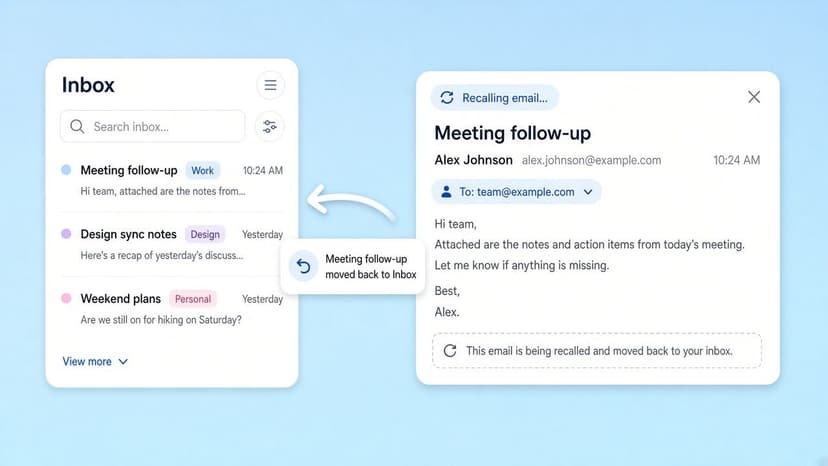
How to Recall an Email in Outlook (2026)
How to recall an email in Outlook step by step for new Outlook, classic Outlook, web, Mac, and mobile, plus when recall works and what to do when it doesn't.
2026-09-30T18:25:57.000Z
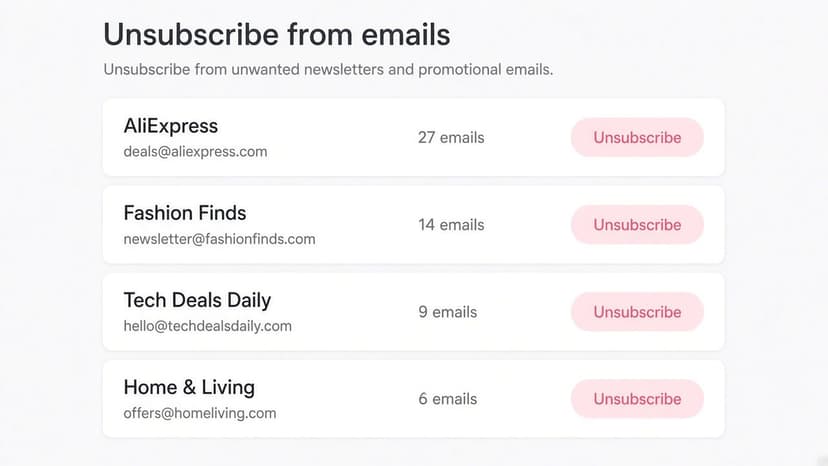
How to Stop AliExpress Emails (2026)
Stop AliExpress promotional emails: the unsubscribe link, notification settings in your AliExpress account, and what to do when the deals keep coming.
2026-09-30T18:25:57.000Z
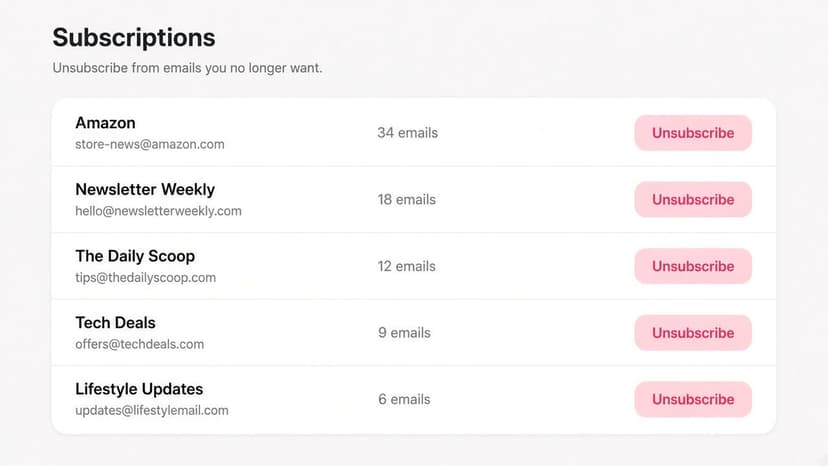
How to Stop Amazon Emails (2026)
Stop Amazon marketing emails with the Communication Preferences Center, manage Amazon email subscriptions, and handle order emails you can't switch off.
2026-09-30T18:25:57.000Z
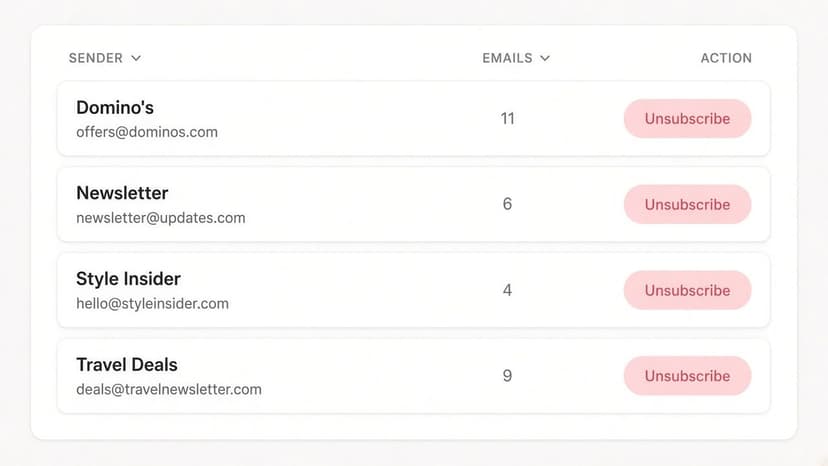
How to Stop Domino's Emails (2026)
Stop Domino's emails with Domino's official opt-out page, stop Domino's text offers, and know which rewards emails keep coming.
2026-09-30T18:25:57.000Z